Tuesday, September 11, 2012

Northern Exposures

I don't always get around to editing all the photos I've taken over the years. Here's a few of my most recent edits. Enjoy.

Lolo National Forest
Descent from Cube Iron Mountain - Lolo National Forest, Montana

Olympic National Park
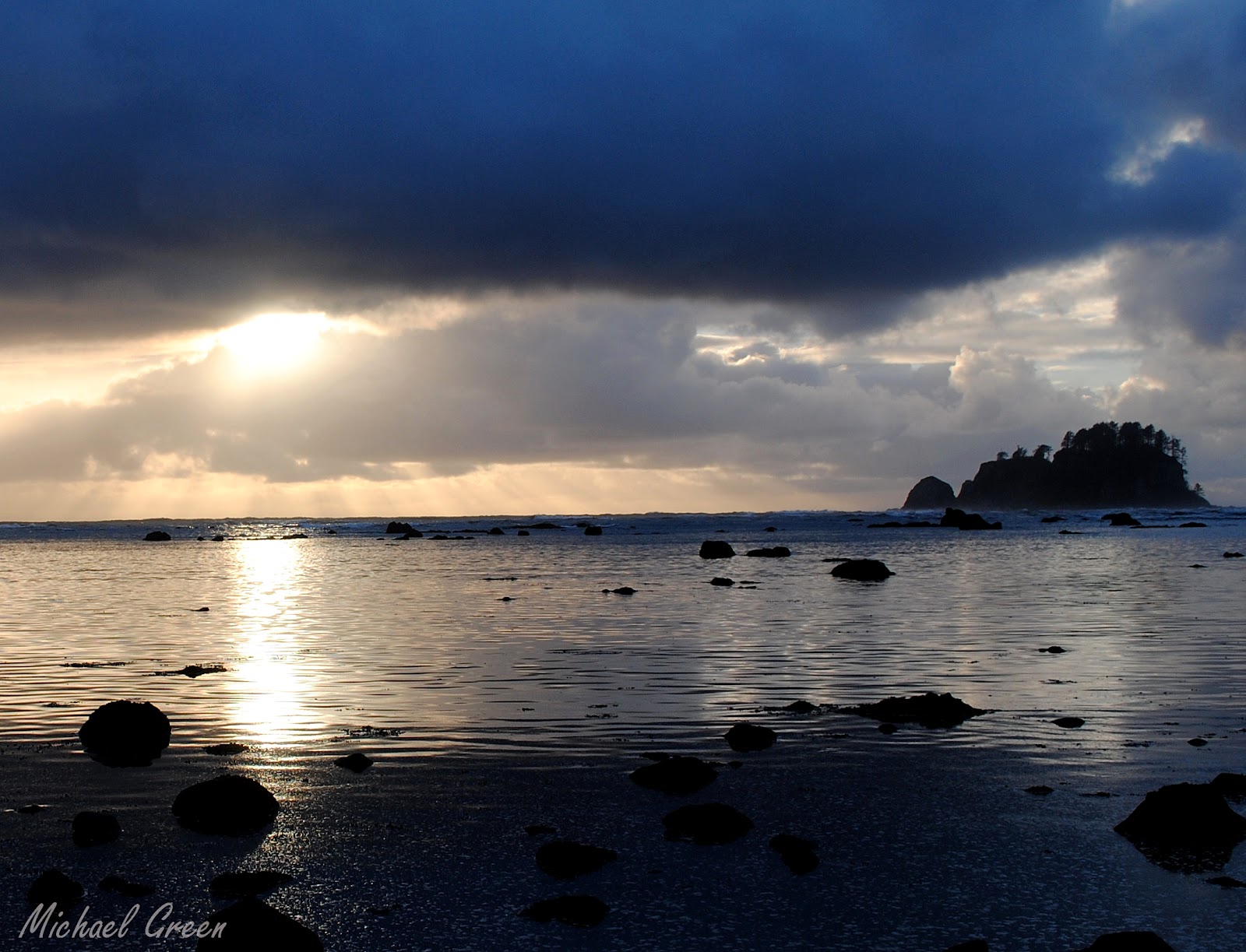
Capa Alava sunset - Olympic National Park, Washington

Glacier National Park
Two Medicine region - Glacier National Park, Montana

Idaho Panhandle National Forest
Mountain reflection in Upper Stevens Lake - Idaho Panhandle National Forest, Idaho

Wednesday, September 5, 2012

Gear Review: Therma-a-Rest Z-Lite Sleeping Pad

Therm-a-Rest Z Lite
This foam mattress is one of the most popular sleeping pads for ultra-lite backpackers, and for good reason, it only weighs a scant 14 ounces. I bought this last year while planning my thru-hike of the Appalachian Trail, which I had to cancel do to a back injury (see I Wake Up ). I wanted something to sleep on that I didn't have to blow up every night, and wouldn't ever go flat. Other than the weight, that's the best thing about this pad. You reach your campsite for the night, unstrap it from your pack, toss it in the tent, and you are done. You don't even need a tent either. Set the pad on the ground, it won't damage it in any way. Need a chair to sit by the fire? Fold it up, it works great. It's durable with multiple uses, and compared to the inflatable pads, it's very inexpensive, just 39.95 on Amazon.

The problem is that the ultra-lite weight comes with a catch. The first, and most obvious, is that it's bulky. Unless you have a really big pack, you'll have to strap this to the outside, which in itself presents a new problem, how to protect it from the rain. Therm-a-Rest does not sell a stuff sack sized for the Z-Lite, so you'll have to either find one that fits, or make one yourself if you want to go that route. The other option is to buy an over-sized pack cover, or a poncho that will cover both you and the pack. Even if it get's wet, in my experience it did not soak or retain any moisture, so wiping it down with a camp towel or a piece of clothing could work too.

My biggest issue with this pad is comfort. Through my youth and even as recently as last summer, I slept on the bare ground while out in the wilderness. Hard ground never bothered me. As I've gotten older however my sleeping style has shifted to more of a side posture, which is just fine in a bed. On the ground or the Z-Lite however, I've found myself waking up in the middle of the night in pain or with a dead arm, which sucks. On my back or stomach I sleep fine. Ground selection is something to really consider when using this pad. Unlike the Big Agnes Air Core, you don't want to lay the Z-Lite on hard or rocky ground, because you'll feel it in the middle of the night.


I can't really comment on the insulating qualities. I've mostly used this pad in Arizona in Spring and Summer where the nights rarely get below 50. I used it for a 5 day 50 mile trek around the Seven Devils in Idaho last August, and with my North Face Orion 20, I never slept cold into the 40's.

Summary: 

If you don't mind trading comfort for light-weight simplicity then I would recommend the Therm-a-Rest Z Lite. It's easy, durable, and you don't have to worry about it going flat in the middle of the night. I've read plenty of cases where this pad lasted an entire 2,000 mile-plus thru-hike. But if you're a side sleeper, or need the comfort of a soft bed, then you may want to reconsider.
Sleeping Pad
Hells Canyon Wilderness with my cousin Jesse. Z-Lite strapped to my backpack.


Monday, August 27, 2012

Budget Gear Review: Coleman Crescent 15 Degree Sleeping Bag

The Coleman Crescent is a 15 degree synthetic sleeping bag that you can pick up on Amazon.com for $54.99, and was the first sleeping bag I purchased when I started backpacking. It's still in my gear collection, and it still gets used. I've grown very fond of this bag over the years. 

The first thing I noticed when I pulled it out of the box is how sharp it looks. It's just a nice looking bag. I love the blue and black color scheme, and the Coleman lantern logo in the center. In fact, one of the reasons I bought this bag was because it was a Coleman. At the time, before I ever heard of Marmot or Big Agnes or Western Mountaineering, I thought Coleman was the top-of-the-line maker of sleeping bags. But unlike other budget gear I've purchased, the Coleman Crescent did not disappoint at all.


The best part about this bag is that it's warm. I can't say if it's true to the 15 degree rating or not, but I can say that I've never been cold in this bag. The first year I had it, I used it a lot for backpacking in the summer and fall in Washington and north Idaho, but since then I mostly use it for car camping, and it always keeps me warm. I've even lent it out to friends on the rare occasion I could convince them to go backpacking with me, and even they comment on it's warmth. The coldest conditions It's been used in were in the Washington Cascades in Spring, on snow at about 6,000 feet. I can't say for certain how cold it got at night but I'm guessing in the 20's, since I was chilled in my 20 degree North Face Orion, while my brother stayed warm in the Coleman Crescent. But it's not just warm, it's comfortable too. It seems roomier than my other sleeping bags, and I tend to sleep better when I use it. It's made well too. I've had it since 2008 and it's still in great shape. You can tell by the feel of it, and by the look of it, that it's designed and built very well.

My bro staying warm in the mountains
One of my favorite things about this bag is the zipper guard, which is a plastic "case' that fits over the zipper to prevent snags, and it actually works. Nothing is more irritating then snagged zippers, and with my other sleeping bags it's a constant problem, but with the Coleman Crescent it's a non-issue.

The only gripe I have about this big is that it's big and heavy. It does not compact very well. This sleeping bag will probably only fit inside an 80 liter plus backpack. Otherwise you would have to strap it on the outside. I never tried it with a compression sack, but I'm sure you would be able to cut down on that bulk if you used one. On my scale the bag weighed in at 3pounds 8 ounces, which is lighter than the 5.2 pound listed weight on Amazon, but still on the heavy side.

Summary: 

This is a nice sleeping bag, and $50.00 is a good deal. Sure it's big and heavy (what do you expect for that price?), but it does what it's supposed to do: keep you warm. With the proper care it will last for years. If you're on a budget, or a beginning backpacker, or both, I highly recommend this sleeping bag for your all-around 3 season bag, especially if you live up north.

I know I just posted this pic on my last blog but it's in the only shot I got of the zipper guard. Check it out.

Wednesday, August 22, 2012

Budget Gear Review: CUSCUS Expedition 88

There are so many options out there for backpacking gear that often times it can be a headache deciding what gear to actually purchase, especially if you're new to backpacking. When I first started backpacking, I really didn't know what I was doing when I jumped online to shop for gear, so naturally (and because of my budget) I gravitated toward cheaper gear. I remember my first trip into REI. I was looking for a tent. I saw the prices REI was charging, and my jaw dropped to the floor. "This place is a rip off" I told myself, and I walked out of the store and bought a $30 two-man "backpacking tent" from another outfitter. All summer I lugged that heavy piece of crap into the mountains. It wasn't just a tent either. I bought a budget backpack, a budget sleeping bag, and a budget sleeping pad. nearly 5 years later only one of those items passed the test, and remains in my garage (okay 2 actually, but one of them is out the first chance I get). 

Even now I'm on the lookout for good buys on gear. It's just the nature of the beast when good quality gear is so expensive. Up to now I have avoided reviewing the cheaper gear that I buy, but after using one of those items in a backpacking trip last week, I thought the public had a right to know before buying some of this stuff. So as of now I am going to review a few of the budget off-brand items I have purchased and used over the years. 

CUSCUS Expedition 88 Liter Backpack.
A newer version of the same pack. Mine is gray and black.

This was the first backpack I ever bought. In the beginning, like I mentioned above, I didn't understand the need to spend $200.00 on a backpack. I found this baby on Amazon.com for $35.00 and was sold. The CUSCUS Expedition is about the cheapest backpack you can find on Amazon, and that, combined with it's huge carrying capacity is the reason I bought it. Of course, since then I've learned that bigger is not better in the world of backpacking, but at the time I thought I needed a huge pack to carry all my crap, and actually I did because all the crap I bought was as equally huge.

The CUSCUS Expedition is actually not a bad looking pack. It's gray and black, which I like. It's made of a thick canvas material. It looks durable. It has 3 huge outside pockets, and a pocket on the inside for a water bladder... And that's about the only positive things I can say about this pack.

One thing I noticed immediately was how stiff the zippers are. When those outside pockets are full of gear, it is actually very difficult to close the zippers. Now, that's not a huge problem, but let me tell you it can be a major annoyance when you take a pit stop on the trail and are holding everyone up because it takes so long to zip your pack up. The zippers however are nothing compared to the hip belt, which I will flat out say is a total piece of crap. First off the hip belt will only tighten to a certain degree, and any further attempts to tighten it will only result in the pack actually twisting on your back, or the buckle coming apart. Even while hiking, the buckle will sometimes just come apart for no apparent reason. It's quite frustrating. I bought a replacement buckle from REI in the hopes of fixing the problem, and while the buckle actually stayed together I still could not tighten the hip belt. I found the only way to adequately tighten the belt was by actually unbuckling the belt, and individually sliding either end further apart from each other, and then sucking in your gut and buckling them together. Which in the end only revealed another problem. The belt would quickly work it's way loose. When I say "quickly" I mean within 10 minutes of tightening the help belt, it will be so loose on your hips that you can look down and see a gap between the belt and your waist.

With my cousin Luke on the Tucannon River, notice his backpack rides above his shoulders.
All this of course leads to the biggest problem with this pack. It does not carry weight well at all. When I first started backpacking I was carrying 35 pounds in this pack, which should be no problem for a pack this size. But I was pretty much always miserable wearing it. You will spend much of your time trying to adjust this pack so it rides comfortably, but all your efforts will be wasted. No matter what you do the shoulder straps will hang off your shoulders causing pain and discomfort. Sure, it has an adjustable torso, but it does no good at all. The pack sags, and the weight is carried on the shoulders. I tried everything, including packing it a variety of ways, but nothing worked. Once while taking this pack on an overnighter in the William O Douglas wilderness in Washington, my hands swelled up enormously.  My fingers were like bratwursts attached to my hands. In the end the only way to carry this pack with any semblance of comfortably is to physically hold the shoulder straps up with your hands.Not fun.

The last thing I'll say about this pack is that after several years of barely any use, the stitching is coming out in a variety of places, but mainly on the zippers, the belt, and the inside pocket for the water bladder, which has completely separated from the seam.

Summary:

Sure this pack is only $35, but you get what you pay for. A poor quality, cheaply made, poorly designed backpack, with a suspension system that flat-out does not work. If you like pain, then buy this pack, but I would suggest forking over some extra dough and buying one that actually works and will last... Of course if you keep it light, and only do short mileage overnighters, then it might work okay. In that case you can buy it here.


Backpack
Low rider.

Wednesday, August 15, 2012

Redemption Trail: Mount Baldy Loop


mount baldy wilderness

When most people think of Arizona, they picture sand, and cacti, and rattlesnakes. They picture desert. I was the same way. When I was told of lush pine forests in Arizona, much like the Pacific Northwest, I didn't believe it. Looking around Phoenix, it's hard to believe. Yet it is true. The White Mountains in eastern Arizona is such a place.

After my last Arizona backpacking experience (see “Hell and Back”) I was understandably leery. To say things didn't go as planned is an understatement. It seemed that I still hadn't learned a very important lesson: Before backpacking, call the Forest Ranger and ask about the conditions (road and trail conditions, availability of water, etc.). One simple phone call could have saved me a ton of misery last time out. Well this time I called, and the very helpful Ranger on the phone told me exactly what I wanted to hear. “The East and West fork of the Little Colorado River running strong.” Music to my ears, since we would be following this river (which is really more like a stream) for almost the entire length of our 15 (or so) mile loop. Another thing I did differently is I bought myself a can of bear spray. Now, up north I only carry bear spray in Grizzly country. I'm usually not too worried about their smaller, less aggressive cousins, the black bear. But down here in Arizona, there have been 3 black bear attacks on humans this summer alone, one of which resulted in a fatality, and I don't want to be caught with my pants down, if you catch my meaning. It's better to be safe than sorry (as the old saying goes) especially when I have a girlfriend to protect. Not that Sarah can't protect herself. She is a very capable woman. But I figured that in case a bear ever attacked I would be the one to fight it off, since she is a nurse and can treat my wounds if I get mauled. Besides, I am a man, and that's my job.

It wouldn't be just me and Sarah this time either. James and Maggie were coming too. Now, I love introducing people to backpacking because I love it so much, and want to share my passion with others. It's awesome to have friends that are interested in it. Back home in Spokane, I could barely get any of my friends to go. Mostly they just flat-out aren't interested in the outdoors unless it involves car camping or boating, because let's face it, backpacking takes work. But James, he's like the best friend I never had. Totally up for exploring the outdoors beyond packed campgrounds and speedboats. In fact, they both are.


My favorite thing about this hike in the Mount Baldy Wilderness was the meadows. We started at the West Fork trailhead and almost immediately the trail wound through some of the most scenic meadows I've ever seen. I can just imagine what they might look like in Spring, when everything is in bloom and fresh and new. In one of these meadows, where we stopped to take our first break, we ran into a flock of turkeys. Of course by the time I got my camera out they escaped into the treeline, but it was still really cool seeing them. That is how the first day mostly went. Climbing up hills in deep pine forest and dropping into huge flower covered meadows. A lot of up-and-downs. It was all very picturesque, and I captured some really cool shots with my camera.

mount baldy wilderness
By the time we made our connecting trail at the East fork of the river, all of us were ready to set up camp. James had a brand new pack and was carrying a heavy load, and he was feeling it. Sarah shoulders were killing her. My shoulders were hurting too. I was using a cheap pack because I lent Maggie my good one, and I could not keep the damn things on my hips. As a result most of the weight rested on my shoulders, and the shoulder straps were digging in hard. Poor Maggie was using my pack, which I could tell by looking at her didn't fit at all. Of course it didn't help that she is 5 months pregnant either, but she was trooper and didn't complain.

Turkey Vulture 
We had planned on camping on the east fork of the Little Colorado on the first night, but I couldn't find any established spots where I thought they should be based off my research. Then we ran into a fork in the trail that wasn't marked on the map, and that I couldn't recall reading about in the guidebook. My instincts told me to go “right” at the fork, but just to be sure I dropped my pack and scouted ahead on the left while everyone waited. I crested a hill and saw a huge bird flying overhead that I initially thought was a hawk. I watched him circle overhead a couple times, and then perch in a tree by the trail. When I got closer I saw it wasn't a hawk but a Turkey Vulture. In fact there were about 20 of them perched in several dead trees near the trail. Now, I don't know how many of you have ever seen a turkey vulture, but let me tall you, they are huge ugly-ass birds. They are covered in black feathers, and have a red featherless head, like the Skeksis in “The Dark Crystal”. They can have a wingspan up to 6 feet. I've never been scared of birds (even though I was attacked by a chicken as a small child) but let me tell you, it was unsettling being surrounded by those big ass birds, with their beady little eyes on me, waiting for me to drop from exhaustion so they can peck out my eyes, and tear out my entrails. Of course, I had left my camera back with my pack, and didn't get a photo.

Eventually after a bit of backtracking we found a good campsite in a grove of trees near the water, nestled at the edge of a large meadow. That night we sat around the fire watching the Perseid meteor shower. It was pretty amazing. Out there in the wilderness, away from city lights and traffic and tv. Enjoying a warm fire, good food, and good company. For thousands of years people have entertained themselves that way. That's one of the coolest things about backpacking. It takes you back to a simpler time...

The next morning saw the separation of our party. Poor Maggie was having some feet issues. Apparently they can grow when you're pregnant, and in this case her feet outgrew her boots, and they weren't very happy. I'm actually surprised she made it as far as she did. She's never backpacked in her life, she was carrying 30 pounds in an oversized pack, and she is 5 months pregnant. Most people wouldn't even have attempted it, especially considering we were at high altitude the entire time. The woman's got moxy for sure.

The second day was an uphill slog to Mount Baldy, which is the highest peak in the White's at 11,400 feet. The first day we stayed around 9500 feet, and even then you could feel the difference in altitude. I'm used to eastern Washington and norther Idaho where even the highest mountains barely reach 7000 feet. The White Mountains in Arizona lie on the Colorado Plateau, so it's not that the mountains are bigger, they just sit at a much higher elevation. You could really feel it on the uphills too, when your heart is pounding, and your breathing like you just sprinted a mile. Even in camp the night before, just standing up from a squatting position caused dizziness.

One of the craziest things we saw on that second day was huge swaths of dead trees. We were standing on a rock formation probably somewhere around 11,000 feet, looking out over a huge area of some of the prettiest country you can imagine, and there were large portions of standing dead trees, especially on the eastern flank of Baldy. There was an older couple standing there with us, and they told us that they hike the Mount Baldy loop every year, and every year there are more and more dead trees. They also told us that the cause of all the dead trees is a bark beetle. Apparently these beetles can attack and kill mature pine trees, and their handy work is very apparent in the Mount Baldy Wilderness. We had to hike through a large chunk of wilderness full of dead trees. It was like a graveyard. Even more so than hiking through burn areas. There were dead-falls everywhere, and the trees still standing croaked and groaned in the wind like they would topple over any minute. It was actually quite eerie.

mount baldy wilderness
See the dead trees in the background?
That night we found one of best campsites I've ever seen. It was in a grove of trees in the middle of a big meadow, and the river ran right through it. It was so calm and peaceful and relaxing. We were both so tired we skipped the meteor show, and were in bed at 9 o'clock. Except the sound of running water the night was quiet, and we both slept as good as can be expected. It's funny how difficult it is to sleep in the backcountry. Statistically it's very safe, but you always have some worry in the back of your mind that prevents you from getting a good nights sleep. I expect it has something to do with being alone in the middle of the woods, in the black of night. Knowing that If something did happen you couldn't jump in your car or pick up your cell phone. In the backcountry you truly are on your own. I think that's why I like it so much.

I woke up at dawn, and jumped out of my tent with my camera hoping to catch some elk in the meadow. We had seen scat during our walk in, and I knew this area was popular for elk hunting so I thought I could get lucky, but it wasn't to be. Instead I saw two coyotes sniffing around. I guess the river drowned out my footfalls because they didn't notice me, and I was able to photograph them for about 15 minutes before they disappeared in the timber line. Unfortunately I just don't have the right lens to capture good photos at a distance, so they didn't turn out that great, but it was still a really cool experience sitting in the grass watching them.


 Off at 9am we had about a 4.5 mile hike out over level ground, which we did in about an hour-and-a-half. It's always nice on the last day because your food is mostly gone, and your pack is lighter. Sarah's feet were killing her so she made the entire hike in flip-flops. I called her “crazy” but apparently it was rather comfortable, and now she is looking at wearing sandals permanently on future backpacking trips. I was pleasantly surprised how beautiful the White Mountains are, and I can't wait to go back. The only problem is that it's a 4 hour drive, through bad traffic, because so many people escape to there from Phoenix in the summer time, on account of it being 20 degrees cooler. A far cry from the days when I could just drive 20 minutes east from Spokane, and be in the same type of lush green environment as the Whites. Mostly I was happy that the hike turned out so well since the first time I took Sarah was nearly a disaster. I definitely felt redeemed from the first fiasco.


Thursday, August 2, 2012

Gear Review: Big Agnes Insulated Air Core


What I love the most about this pad is that it's so comfortable. Despite my 230 pound frame, the 2.5 inch thickness ensured I never touched the ground. Even on rocky or hard ground this pad will ensure a comfortable night's sleep. My girlfriend has been using this pad lately and she sleeps like a baby on it. Other hikers I know who own one all rant and rave about how comfortable it is. The insulation seems to work well too. It keeps me warmer than other pads that I've tried, even on snow or frozen ground.

Inflating the pad is pretty easy, once you get the hang of how the valve works. At first it can be a bit tricky, but once you get the hang of it, the pad blows up in just a couple minutes. It packs up very small too. Certainly much smaller than a self-inflating or foam pad. With that being said, on long multi-day backpacking trips I have found inflating the pad everyday annoying, and prefer the simplicity of a foam pad.

Another reason I would chose foam on a long trip, is that I'm not convinced of this pads durability. I've had mine for 3 years now and have used it regularly, for both backpacking and car camping. This year however I was waking up in the middle of the night with a flat pad. At first I thought it was a valve issue. Maybe I wasn't tightening it enough. But after I ruled that out I submerged the pad in a bath tub to check for holes, there were none. Instead I found that the seam that holds the top and bottom together had failed, and air was leaking from dozens of holes in that seam, a spot entirely un-fixable with a patch kit. Needless to say, I'm taking mine back to REI, and have yet to decide if I'll buy a new one, or go an entirely different direction. I've heard nothing but good things about the Big Agnes Air Core, so it could be that I just bought a faulty one.

Summary: This bag offers the best comfort in backcountry camping, and is particularly good in the cold, and on rocky/hard ground. The problem is that because it's an air mattress, it's only a matter of time before it develops holes.

UPDATE 1 /26/15

I returned the pad for another Big Agnes Insulated Air Core. My new one went flat the first time out with it. Thinking I punctured it somehow I submerged it in the bathtub to find the leak, there were none in the pad. Instead, the valve itself had a slow leak. I contacted Big Agnes for repair and still have not heard back from them. When inflated properly, the Insulated Air Core is a very comfortable pad, but between the seem and the valve failing on two different pads, and the abysmal customer service I have received, I cannot recommend this pad. Do yourself a favor and look at Thermarest, REI, or NEMO instead.

Monday, June 25, 2012

Hell and Back: Hell's Hole Overnighter


Salome Wilderness


I knew planning a backpacking trip in Arizona presented a new set of unfamiliar challenges, mainly because of the intense heat and lack of water. I thought I found the perfect trip to introduce my girlfriend Sarah to backpacking, and introduce me to this new kind of desert backpacking, to a place called Hell's Hole, in the Salome Wilderness near Roosevelt Lake in the Tonto National Forest. On paper it sounded pretty simple; 12 miles round trip, 2700 feet of accumulated elevation gain. Plenty of shade. Plenty of water. In fact from the research I did in guidebooks and online, I somehow got the impression that water was everywhere, even in the summer. Boy was I wrong.

The trail started out easy, in a pretty forest full of huge Ponderosa pine (my second favorite tree), and even though it was 100 degrees, at least we were hiking in the shade. Early on we ran into a hunter checking a game camera who complained that numerous bears were tripping the camera. Not a great sign, and from then on out I was on the lookout for bears. Especially since black bear attacks were dominating the local news. According to what we read, we expected to have several stream crossings on the trail, some maybe waist deep, but every stream we came too was dry. Although this concerned me, they were very small streams, and even up north it wouldn't necessarily be unusual to see some dry this time of year.


Workman Creek

After an hour or so of hiking we arrived at Workman Creek. This was supposed to be a large creek where I expected we would have to don water shoes and wade across, but it had slowed to a trickle. There were two small pools of relatively clear water, and mint plants growing along the banks. This is where I made a big mistake. Sarah and I both had plenty of water, and thinking that we had plenty to make it down to Hell's Hole at the canyon bottom, I didn't stop to drink or replenish our supply.

Funnel Web Spider den
The further we got into the heart of the wilderness the more animal sign I spotted. I saw fur, coyote and bear scat, and even cat tracks. We saw all kinds of insects including funnel web spiders, beetles, caterpillars and bees.

By the time we started our descent into the canyon we were both tired and dehydrated even though we had been drinking water regularly. I learned quickly that in this heat your body sweats out water faster than your can replace it.

 The closer we got to Hell's Hole, the more bear scat I saw. I started to see signs of bear everywhere: overturned rocks, scratched up trees, and large fresh bear droppings so close together that I thought we might actually be following a bear down the trail. I considered turning around because from what I had seen and heard thus far I was concerned we would run into a bear. I decided against it though because it was getting late, and I didn't want to attempt navigating in the dark. Plus, being that we were so close to Hell's Hole, we were looking forward to taking a swim and drinking some water because we were just so hot and thirsty.

The trail down to Hell's Hole is steep and rugged. In fact it's some of the most rugged terrain I have ever been on. It was slow going and hard work, mostly because we were walking on loose rock and steep terrain, but also because I was constantly on the lookout for snakes, even though I thought it might be too hot for them (which it was, we didn't see any). By the time we reached the bottom we were both thirsty and exhausted, and to our shock and utter dismay, the creek was totally dry.


Descending in to the canyon.

After a quick search of the area I found what was left of this canyon paradise that was supposed to be filled with waterfalls and pools, was a small pool of putrid green water, surrounded by animal tracks with a big pile of fresh bear shit near the waters edge, as if a bear had taken a crap while having a drink. To say that I was discouraged by this discovery is an understatement. My mouth was totally parched and I was already nauseous with dehydration. I did an inventory of our water. Both of our water bladders were empty. Sarah had two full plastic water bottles totaling 1 liter and I had a large 1 liter water bottle full. I considered filtering and boiling the putrid green water in the pool, but I decided against it because it just looked so nasty, and I felt so miserable that all I wanted to do was lay down.

Because we were so low on water I decided it would be best not to cook dinner because our freeze-dried meal needed two cups of water, and I didn't think we should waste even two cups. We tried just snacking, but the high sodium content of our trail mix and dehydrated fruit made us more thirsty. Besides that, it was nearly impossible to swallow with a totally dry mouth. In the end we ate practically nothing, and shared one bottle of water. I poured one liter in Sarah's bladder and the last half-a-liter in my bladder, and that's all we had for the hike out of the canyon the next day, which I was totally dreading.

Before we went to bed I hung our food bag in a tree well away from our camp. I was worried about bears because all the sign we had seen on the trail, and because there was fresh scat in and around our camp. I didn't mention this to Sarah because I didn't want her to worry, but counting the scat I saw near the green pool, there were 5 large piles of very fresh berry-filled bear crap in and around our camp. I already felt terrible about the water situation, and even though she was being a total trooper, I didn't want to alarm her any further. In fact, Sarah was totally amazing on this trip. She was calm and cool the entire time, and didn't utter a word of complaint. I kept thinking how lucky I am to have her. Once when I asked her if she was okay she replied, "Don't worry about me. I can handle it. I'm a Higgins."


Hells Hole camp

That night Sarah fell asleep rather quickly, but for me it was a different story. I kept second-guessing myself and some of the decisions I made on the trip. Frankly I was disappointed and angry with myself for putting Sarah in this situation. I was also worried about bears. The forest in that canyon came alive when the sun went down, and I could hear animals moving about all around us. At one point I smelled skunk, another I heard something drinking from the green pool, and numerous time I heard footfalls in the dirt around camp. I thought for sure I would be seeing a bear that night. I kept thinking of a conversation I had with my friend James the night before. He thought I was crazy because I wasn't planning on bringing bear spray."You're not worried about black bears?" he asked. "Nope", I replied confidently, "up north I only bring bear spray into Grizzly country." And here I was laying in this tent with the love of my life, hungry, thirsty, exhausted, and worrying about black bears. I didn't sleep.


I woke Sarah up around 5:30AM and we packed up and started the hike back. Of course we had to skip breakfast because we had no water. Neither of us were in any condition for such a grueling hike, especially me. I guess it's because Sarah has lived in the desert so long that she wasn't feeling the effects of the heat or thirst as bad as me, or if she did she wasn't vocalizing it to me. It wasn't long on the ascent up the canyon that I began to feel sick again. Any second I felt like I was going to vomit. I was taking tiny sips of water (to conserve it) but it wasn't enough. I felt lethargic and sick to my stomach, and moved slowly. We took a couple early breaks. About a mile up the canyon I ran out of water completely, and regretted immediately not taking some water from the green pool. Yes it was nasty and stinky, but It could potentially be a lifesaver. I kept thinking of Cody Lundine from Dual Survival and remembering an episode where he drank from a pool much like the one I passed up, and saying something like, "If you find water in the desert, you better drink it." As I slowly trudged up the canyon my head pounded with every heartbeat, and I felt like I would upchuck any second. Between day dreaming of water I kept picturing myself laid up in the brush while Sarah tried to make it back to the Durango to get help. I would have never forgiven myself if something bad would have happened to her, but physically she was faring much better than me. I kept thinking that I let her down by not being as prepared as I should have. It was a hard feeling to shake.

But we finally made it out of the canyon, which was a big morale boost for both of us. The hiking in the forest was much easier as we weren't going straight up, and the big pine trees protected us from the sun, but the heat was still brutal and we were totally parched. When we reached Workman Creek again I stopped and filtered water. It wasn't very cold, and didn't taste very good, but I drank deeply anyway. We were both glad to see the Durango at the trailhead, and the first store we came to we stopped and bought a bunch of food and drink.


This was my first time backpacking in Arizona and a big learning experience for me, and what I learned was this:

1) Make 100% sure the water source you are relying on actually exists.

2) When coming across water, drink what you already have and refill, even if you think you have enough or don't feel thirsty.

3) If you're out of water and all you have to drink is a green pool of nasty water that smells like shit, make it as safe as you possibly can, and drink it anyways.